




Hail damage
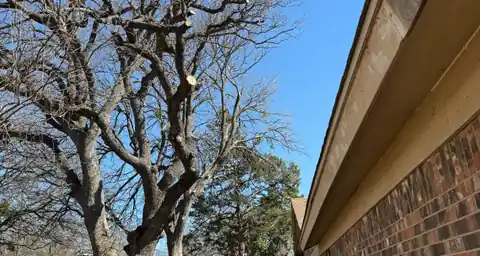
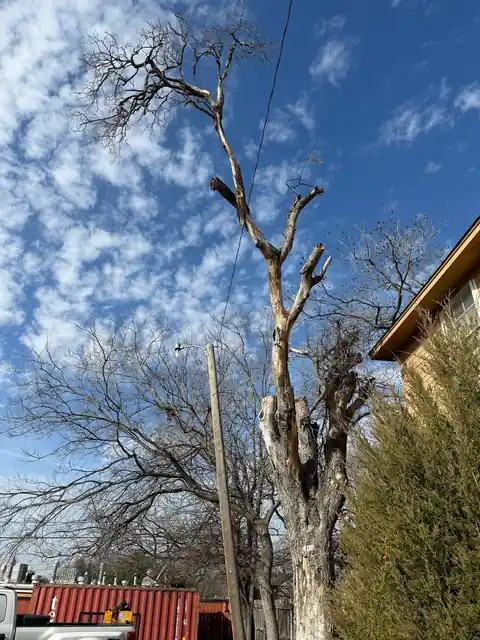
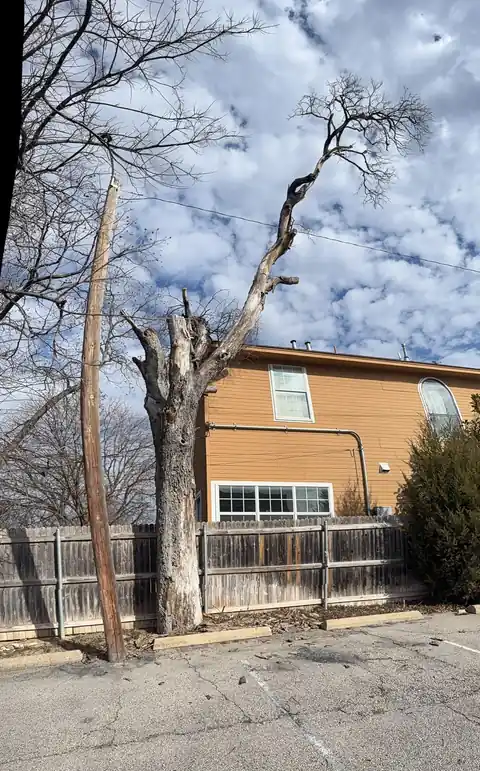
Torn leaves grow back. Bark stripped to bright wood on the top of limbs is worth a photo and a date.
Texas Tree Tops, a family-owned Fort Worth tree service run by owner Daniel Sanchez since 2007, writes these tree care guides for homeowners across North Texas. They give plain answers about the trees DFW yards grow most, such as live oaks, post oaks, pecans and crepe myrtles. Learn what to look for, which month to act and when a crew should take over.
Each species keeps its own calendar and its own weak spots. Start with the tree you have.
Live oaks spread wide, low limbs over roofs and drives. Timing matters because of oak wilt.
This Cross Timbers tree can suffer badly when construction damages its roots.
Cedar elm is tough, handles drought and is a common street tree across Fort Worth.
The pecan is the state tree. It has heavy limbs, needs a lot of water in August and has a nut crop to manage.
This front-yard bloomer suffers the most from hard topping.
It splits apart at narrow forks as it ages, often after a storm.
Look from the ground and from a distance. If a limb touches a power line, call the utility first.
Torn leaves grow back. Bark stripped to bright wood on the top of limbs is worth a photo and a date.
A long strip of bark blown off down the trunk means the tree needs a look, even if the leaves stay green.
Drought stressed trees show leaves scorched brown at the edges or dropping in midsummer, and those signs point to thirst before disease.
Texas A&M Forest Service confirmed this beetle in Tarrant County in 2018. Ash trees with thinning tops and small D-shaped exit holes need a specialist to confirm it.
A Bradford pear that has split at its narrow fork usually needs removal. Tell us what sits underneath it.
After hail or a lightning strike, see storm tree removal.
It might be a broken limb, a new lean, browning leaves or a nut crop that failed.
Give the date you first noticed it, and say whether a storm or digging came first.
Name anything under the tree, like a roof, fence, pool, drive or the neighbor's yard.
We look at what we can see and list any tree work in a written estimate. If the question needs a specialist, we name one.
Get My Free Estimate
Yes. These guides cover the timing, trees, soil and hot, dry summers around Fort Worth and Dallas. Advice from places like Ohio or the Pacific Northwest may use the wrong calendar for North Texas, so check where a guide comes from before you follow it.
No, they cannot. They help you track changes and ask better questions. A forester or another specialist must confirm oak wilt and emerald ash borer, and a photo is rarely enough.
It depends on the tree, and each guide gives its own calendar. Crepe myrtles are shaped in late winter, pecans take a winter trim, and oaks follow a summer to winter window because of oak wilt. The month-by-month calendar for shade trees is in the tree pruning guide, and oak timing is in the oak tree trimming guide.
Look from the ground and from a distance, and call the utility first if a limb touches a power line. Torn leaves grow back, but bark stripped to bright wood on the top of limbs is worth a photo and a date. A long strip of bark blown off down the trunk after lightning means the tree needs a look, even if the leaves stay green.
Yes. Texas A&M Forest Service confirmed emerald ash borer in Tarrant County in 2018. Ash trees with thinning tops and small D-shaped exit holes in the bark need a specialist to confirm the beetle.
Usually, yes. Bradford pears split apart at narrow forks as they age, often after a storm, and once a trunk splits at its fork, removal is usually the safe answer. Tell us what sits underneath the tree, such as a roof, fence or drive, so the estimate plans for it.
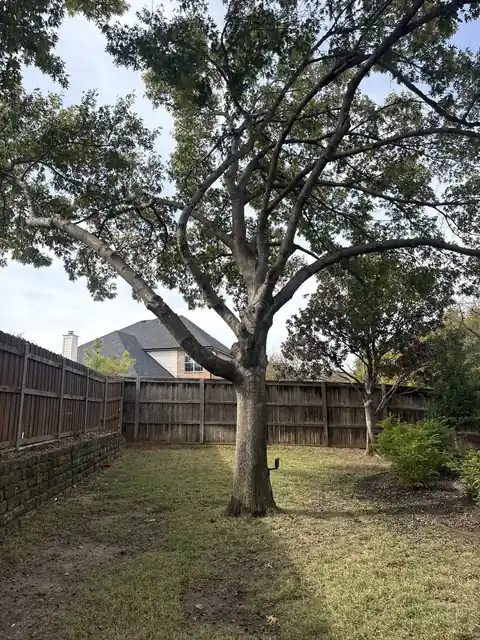
Ask the question the guides left open, and include the address. You get a free written estimate before any work starts.
Texas Tree TopsFort Worth, TX(682) 708-4984Open 24 hours Mon to Fri · Sat and Sun 9am to 5pm